
Urine leakage, also known as urinary incontinence, is the involuntary loss of urine. It can affect daily activities, sleep, confidence and quality of life, but several causes can be assessed and managed.
Leakage may occur while coughing, sneezing or exercising, or it may happen with a sudden urge to urinate. Some people experience frequent small leaks, while others have difficulty emptying the bladder completely. Identifying the type and possible cause is an important first step towards suitable care.
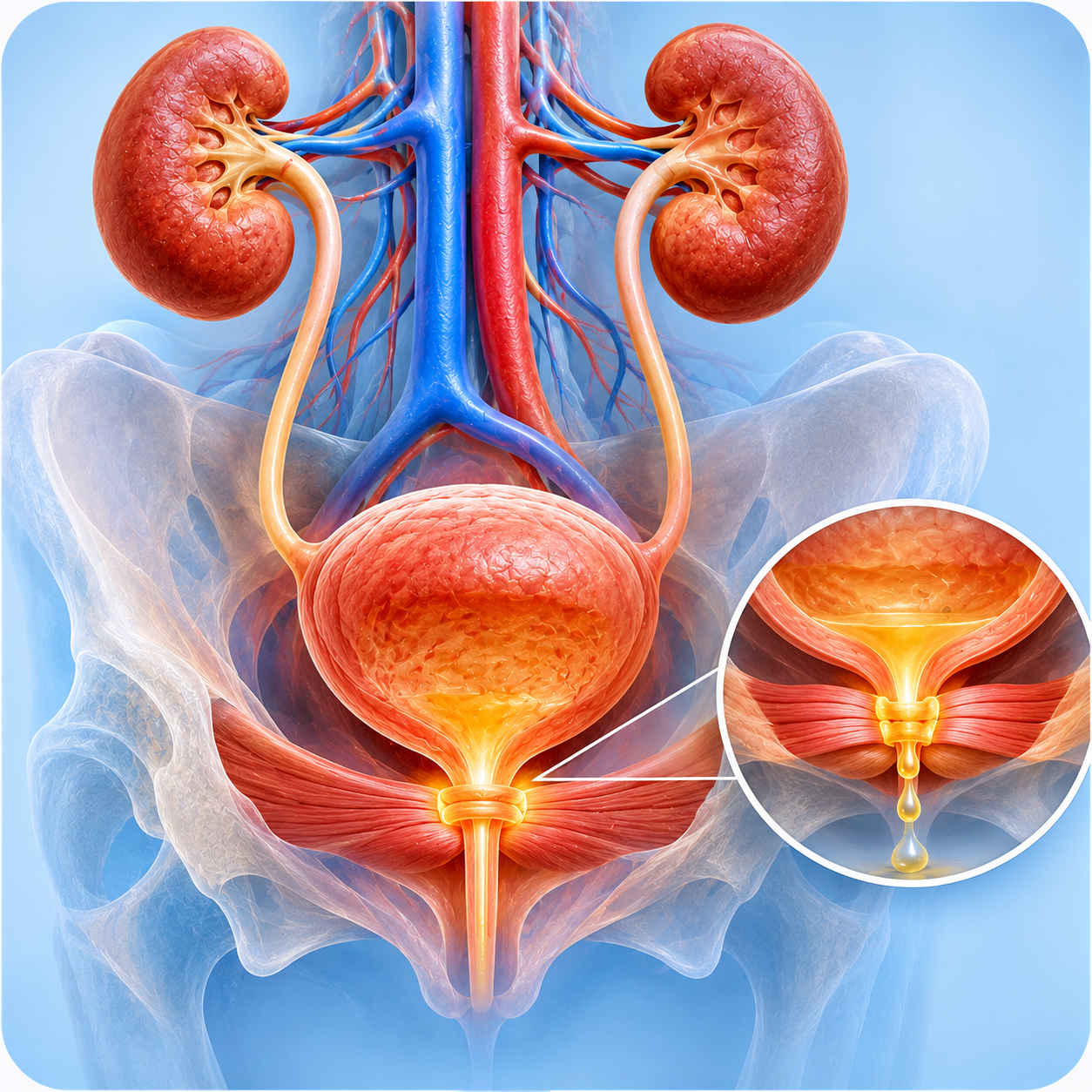
Urinary incontinence means losing urine unintentionally. It is a symptom rather than a disease and may occur because of changes in bladder function, pelvic floor support, urinary sphincter control or other medical conditions.
Urine is stored in the bladder and released through the urethra when the bladder and its surrounding muscles work together. If the bladder contracts unexpectedly, the outlet does not close properly, or the bladder does not empty effectively, urine leakage may occur. Incontinence can affect adults of any age and can occur in both men and women.
The bladder may contract too early or produce a sudden urge that is difficult to control.
Weakness or reduced support around the urinary sphincter and pelvic floor may allow urine to escape during activity.
If the bladder does not empty completely, retained urine may contribute to frequent dribbling or overflow leakage.
The circumstances in which leakage occurs can help identify the type of incontinence and guide further assessment.
Urine leaks when pressure increases inside the abdomen, such as during coughing, sneezing, laughing, lifting or exercise. It may be associated with reduced pelvic floor or sphincter support.
Urine leaks after a sudden, strong urge to urinate that is difficult to postpone. It commonly occurs with overactive bladder symptoms such as urgency and frequent urination.
Both stress-related leakage and urgency-related leakage occur. Assessment helps determine which symptoms are most troublesome and should be addressed first.
The bladder does not empty properly and becomes overfilled, causing frequent dribbling or leakage. Possible contributors include prostate enlargement, urethral narrowing or weak bladder contraction.
A person may have difficulty reaching or using the toilet in time because of mobility, cognitive or environmental limitations, even when bladder function is relatively preserved.
Short-term leakage may occur with a urinary infection, constipation, certain medicines or other temporary health changes. The underlying cause needs assessment.
Symptoms vary depending on the type of incontinence. You may experience:
Do not delay assessment if urine leakage is accompanied by:
Inability to urinate, or new bladder symptoms with leg weakness or saddle-area numbness, requires urgent medical assessment.
Urinary incontinence can have more than one contributing factor. The likely causes may differ according to age, sex, medical history and the pattern of leakage.
Reduced pelvic floor support, including after pregnancy or childbirth, may contribute to stress urinary incontinence.
Prostate enlargement may contribute to incomplete bladder emptying and overflow symptoms. Some prostate treatments or surgeries can also affect urinary control.
Unexpected bladder muscle contractions may cause urgency, frequency, night-time urination and urge leakage.
Infection or inflammation may temporarily cause urgency, frequency, discomfort and leakage.
Diabetes-related nerve changes, spinal conditions, stroke and certain neurological disorders may affect bladder sensation or control.
Constipation, obesity, reduced mobility, chronic coughing and certain medicines may contribute to urinary leakage.
The evaluation considers the patient's anatomy, medical history, previous procedures and specific symptoms.
In men, leakage may be associated with prostate enlargement, urinary retention, overactive bladder, diabetes, neurological conditions or previous prostate and pelvic procedures.
In women, stress and urge incontinence are common patterns. Pregnancy, childbirth, menopause, pelvic floor changes and previous pelvic procedures may be relevant.
The symptoms listed are examples, not a diagnosis. A clinician can help determine the likely cause and whether specialist urological or other assessment is appropriate.
Evaluation begins with a discussion about the pattern of leakage, urinary habits, medical history and its effect on daily life. Tests are selected according to symptoms and examination findings.
The doctor may ask about:
Depending on the patient's symptoms, examination may include assessment of the abdomen, pelvic floor, neurological function or prostate. The type of examination is explained and tailored to the individual.
Urine analysis may help identify infection or blood. A bladder scan or ultrasound may be used to assess how much urine remains after urination.
Depending on the findings, a bladder diary, uroflowmetry, urodynamic testing, ultrasound or cystoscopy may be considered. These tests are not necessary for everyone.
| Investigation | What It May Help Assess |
|---|---|
| Urine analysis | May identify signs of infection, blood or other abnormalities in the urine. |
| Urine culture | May be advised when a urinary infection is suspected, to help identify the bacteria and guide treatment. |
| Post-void residual (PVR) measurement | Measures urine remaining in the bladder after urination and may help identify incomplete emptying or retention. |
| Bladder diary | Records fluid intake, urination times, urgency and leakage episodes to identify patterns. |
| Uroflowmetry | Measures urine flow and may help assess possible obstruction or reduced flow. |
| Ultrasound | May assess the kidneys, bladder, prostate or urinary tract when clinically indicated. |
| Urodynamic testing | Selected tests may assess bladder storage, pressure, capacity and emptying function when the diagnosis remains unclear or results may change management. |
| Cystoscopy | A camera examination of the urethra and bladder may be considered when there is a specific indication, such as blood in urine or suspected structural disease. |
Advanced investigations are selected when they are likely to add useful information. Cystoscopy and urodynamic testing are not routine for every patient with urinary leakage.
Treatment depends on the type of incontinence, the underlying cause, symptom severity, general health and the patient's preferences. Some people improve with non-surgical measures, while others may need medicines or specialist procedures.
Adjusting fluid intake, reducing bladder irritants when relevant, managing constipation and maintaining a healthy weight may help some patients.
A structured schedule for urination may help some people gradually improve bladder control and manage urgency-related symptoms.
Guided pelvic floor exercises may improve support and control in selected patients, particularly those with stress incontinence.
Depending on the diagnosis, medicines may be considered for overactive bladder symptoms or other identified conditions. Choice depends on medical history, side effects and individual suitability.
Management may focus on urinary infection, prostate obstruction, constipation, medication effects or another contributing medical condition.
Selected patients may be considered for procedures such as bladder Botox, neuromodulation or stress-incontinence surgery. The appropriate option depends on the diagnosis and specialist assessment.
Management may include supervised pelvic floor muscle training, lifestyle measures and selected procedures when symptoms persist. The choice depends on severity, anatomy and patient preferences.
Bladder training, fluid and lifestyle adjustments and selected medicines may help. Further treatment may be considered if symptoms remain troublesome despite initial management.
The priority is to identify why the bladder is not emptying properly. Treatment may involve addressing prostate enlargement, urethral narrowing, medication effects or weak bladder contraction.
Both urgency and stress-related symptoms are considered. Treatment is planned according to the symptoms that are most disruptive and the findings of the assessment.
Different forms of urinary leakage may require different approaches. Treatment that helps one type may not be appropriate for another, so an accurate assessment is important before starting a treatment plan.
While awaiting assessment, some practical measures may help you understand your symptoms and reduce their impact.
Record when you drink, urinate and experience leakage. This can help identify patterns to discuss during consultation.
Avoid excessive fluid restriction. Discuss whether caffeine, alcohol or particular drinks may be worsening urgency or frequency.
Constipation can worsen bladder symptoms in some people. Appropriate dietary and medical management may help.
Knowing where toilets are located and allowing enough time can reduce stress when urgency is difficult to control.
Correct technique matters. A clinician or trained pelvic floor professional can advise whether these exercises are appropriate.
Some medicines can affect bladder function. Do not stop prescribed medicines yourself; ask your doctor to review them.
Explain when leakage occurs, how often it happens and whether you experience urgency, pain, weak stream or incomplete emptying.
Discuss relevant medical conditions, medicines, previous childbirth or pelvic procedures, prostate history and lifestyle factors.
Complete an appropriate examination and arrange urine or bladder tests when indicated by the symptoms.
Review the findings and discuss whether the leakage is stress-related, urgency-related, mixed, overflow or associated with another condition.
Review suitable management options, possible benefits, limitations, risks and the need for follow-up.
Understanding when leakage occurs can help distinguish between different forms of incontinence.
Some patients have leakage because the bladder is not emptying properly. Identifying retention or obstruction can change the treatment approach.
A cause-based plan can help patients understand available approaches and make informed decisions about their care.

Dr. Vineet Malhotra provides consultation for urological conditions and urinary symptoms, including the evaluation of bladder-control concerns and urine leakage.
Qualifications: M.B.B.S., M.S., D.N.B. (Urology)
Experience: 25 years of experience, as provided by the clinic.
Consultation focuses on understanding the pattern of urinary symptoms, assessing possible contributing conditions and discussing appropriate next steps based on individual clinical findings.
Know More About Dr. VineetUrinary incontinence is the involuntary loss of urine. It may happen during physical activity, after a sudden urge to urinate or because the bladder does not empty properly.
Urinary leakage becomes more common with age, but it should not automatically be considered a normal or unavoidable part of ageing. Assessment can help identify possible causes and management options.
The main types include stress, urge, mixed, overflow and functional incontinence. Temporary leakage can also occur with conditions such as urinary infection or medication effects.
Stress incontinence is leakage that occurs when pressure increases inside the abdomen, such as during coughing, sneezing, laughing, lifting or exercise.
Urge incontinence occurs when a sudden, strong need to urinate is followed by involuntary leakage before reaching the toilet. It may occur with overactive bladder symptoms.
Prostate enlargement may obstruct urine flow and prevent the bladder from emptying completely. In some men, this can contribute to overflow leakage, dribbling or other urinary symptoms.
Diabetes may affect bladder nerves and function. It can also increase urine production when blood glucose is high. The cause of leakage should be assessed rather than assumed.
Yes. A urinary tract infection may cause urgency, frequency, discomfort and sometimes leakage. Urine testing may be recommended when infection is suspected.
Some men experience urinary leakage after prostate procedures. The pattern and duration vary, and persistent symptoms should be discussed with the treating urologist.
Testing depends on symptoms. It may include urine analysis, urine culture, a bladder diary, post-void residual measurement or selected imaging and specialist tests. Not everyone needs all investigations.
A post-void residual test measures how much urine remains in the bladder after urination. It is commonly assessed using a bladder scan or ultrasound.
No. Urodynamic testing is used selectively when additional information about bladder storage or emptying may help clarify the diagnosis or guide treatment.
Many patients may be offered non-surgical approaches such as bladder training, pelvic floor muscle training, lifestyle changes or medicines, depending on the type and cause of leakage.
Pelvic floor muscle training may help selected patients, particularly with stress incontinence. Correct technique and a suitable programme are important.
Selected medicines may help some forms of urgency-related incontinence or an identified underlying condition. The choice depends on the diagnosis, medical history and possible side effects.
Yes. Night-time urination and leakage can interrupt sleep and affect daily wellbeing. The cause of night-time symptoms should be assessed because several bladder and non-bladder conditions can contribute.
Excessive fluid restriction is not recommended because it may cause dehydration and other problems. Fluid intake should be appropriate for your health and circumstances. Discuss your fluid habits with your clinician.
Consider an assessment if leakage is persistent, worsening, affecting daily activities or associated with urgency, weak stream, incomplete emptying, pain or recurrent urinary infections.
Inability to pass urine, fever with significant urinary symptoms, visible blood in urine with concerning symptoms, severe pain or new bladder symptoms with leg weakness or groin numbness require urgent medical assessment.
Symptoms may improve, persist or recur depending on the underlying cause and treatment. Follow-up helps assess progress and whether the management plan needs adjustment. No particular result can be guaranteed.
Urinary symptoms should be discussed respectfully and handled with appropriate medical confidentiality, subject to applicable professional and legal requirements.
If urinary leakage is affecting your comfort, confidence, sleep or daily activities, a urology consultation can help assess possible causes and discuss suitable management options.
VNA Hospital
1, Navjeevan Vihar, Geetanjali Enclave,
Malviya Nagar, New Delhi, Delhi – 110017
Appointment: +91 98100 85849
Medical information on this page is for general educational purposes and does not replace a personal consultation, examination or diagnosis. Urinary incontinence can have several causes, and investigations and treatment options are selected according to individual clinical needs. Availability and suitability of specific treatments should be confirmed during consultation.