
By Dr. Vineet Malhotra, Senior Urologist | Sexologist | Andrologist & Male Infertility Treatment Expert
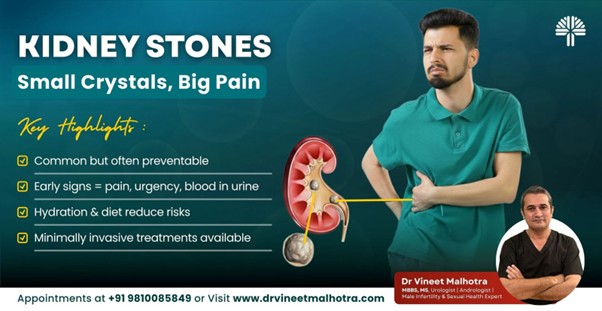
Kidney stones — though tiny in size — can cause immense pain and discomfort. They are among the most common urological problems affecting men, but also one of the most preventable. Understanding their causes, symptoms, and treatment options can make all the difference between prolonged suffering and a quick recovery.
What Are Kidney Stones?
Kidney stones form when minerals and salts in the urine crystallize and clump together. While they may start small, over time, they can grow large enough to block the flow of urine and cause severe pain.
These stones can form in the kidneys, ureters, or bladder, and may vary in composition — from calcium oxalate (most common) to uric acid or cystine stones.
Common Causes & Risk Factors
Kidney stones often result from a combination of lifestyle, diet, and medical factors.
Key Triggers Include:
- Dehydration: Not drinking enough water concentrates the urine, increasing crystal formation.
- Diet high in salt, animal protein, and sugar: These can raise calcium and uric acid levels.
- Sedentary lifestyle: Reduced movement can slow kidney function.
- Family history or previous stones: Increases recurrence risk.
- Certain medical conditions: Such as gout or hyperparathyroidism.
Symptoms You Should Never Ignore
The pain from kidney stones can start suddenly — sharp, cramping, and often radiating from the lower back to the groin.
Warning Signs Include:
- Severe pain in the side, back, or abdomen
- Blood in urine (reddish or brownish tinge)
- Nausea or vomiting
- Frequent urge to urinate or burning sensation
- Cloudy or foul-smelling urine
If you experience these symptoms, it’s crucial to consult a urologist immediately for diagnosis and imaging.
Prevention: The Power of Hydration
One of the simplest ways to prevent kidney stones is also the most overlooked — hydration.
Drinking 2.5–3 liters of water per day helps dilute substances that can form stones. Additionally, reducing excess salt, processed food, and red meat while increasing fruits, vegetables, and citrus (like lemon water) can significantly lower your risk.
Modern, Minimally Invasive Treatments
The good news is that most kidney stones today can be treated without open surgery.
Available Options Include:
- Medication & hydration therapy for small stones
- Shock Wave Lithotripsy (SWL): Uses sound waves to break stones into smaller pieces
- Ureteroscopy: A thin scope passed through the urethra to remove stones
- PCNL (Percutaneous Nephrolithotomy): A keyhole surgery for larger stones
Each treatment is selected based on the stone’s size, location, and composition.
The DVM Approach: Precision & Prevention
At DVM, we focus not only on removing stones but also on identifying the root cause — so recurrence is minimized. Through customized dietary guidance, hydration plans, and regular follow-ups, we help patients take control of their kidney health long-term.
Final Thoughts
Kidney stones are painful — but they don’t have to become a recurring nightmare. Prevention begins with hydration, smart nutrition, and timely medical attention.
Remember: small daily habits can save you from big pain tomorrow. 📞 Schedule your consultation today: +91 9810085849