
By Dr. Vineet Malhotra, Senior Urologist | Sexologist | Andrologist & Male Infertility Treatment Expert
When we talk about prostate health, most men assume it’s a concern for those above 50. The truth is — prostate issues can begin much earlier, often silently. Awareness and early screening can make all the difference in preventing complications and maintaining long-term wellness.
Understanding the Prostate and Its Role
The prostate is a small gland located below the bladder and in front of the rectum. It produces seminal fluid, which nourishes and transports sperm. While small in size, it plays a big role in male reproductive and urinary health.
As men age, the prostate can naturally enlarge — a condition known as Benign Prostatic Hyperplasia (BPH). While this enlargement is non-cancerous, it can cause bothersome urinary symptoms and, if ignored, affect kidney function or bladder health.
Early Symptoms You Should Never Ignore
Prostate-related symptoms can start subtly and progress slowly. Because the gland surrounds the urethra, even mild enlargement can impact urine flow and bladder function.
Common Warning Signs Include:
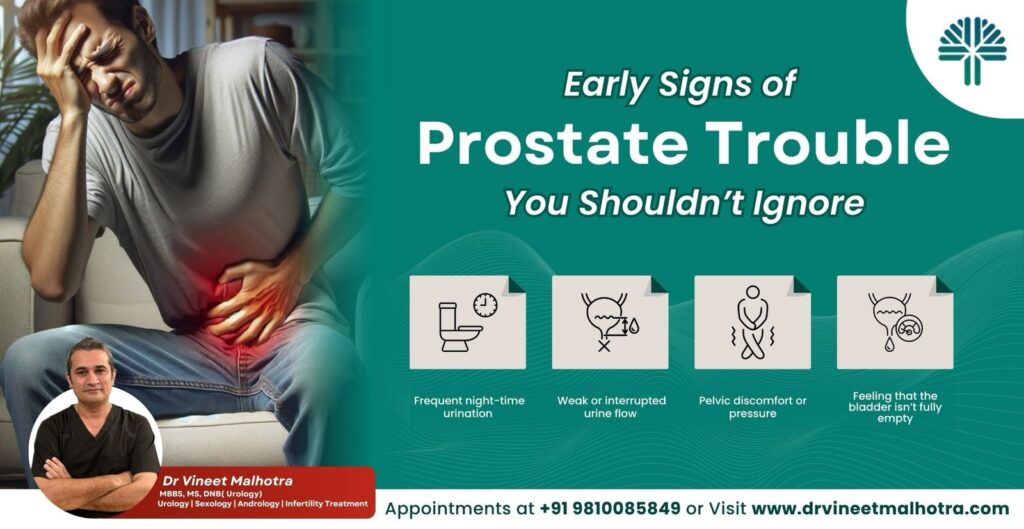
- Frequent urination, especially at night
- Weak or interrupted urine stream
- Difficulty starting urination
- Pelvic discomfort or pressure
- Feeling like the bladder isn’t fully empty
- Occasional burning or urgency while urinating
Ignoring these early signs can delay diagnosis and lead to complications such as urinary retention, bladder stones, or infections.
Why Early Screening Matters
Prostate problems are highly treatable when caught early. Regular checkups after the age of 40 — or earlier if symptoms appear — help detect:
- Prostate enlargement (BPH)
- Prostatitis (inflammation or infection of the prostate)
- Prostate cancer — when identified in early stages, outcomes are significantly better.
Screening usually involves a physical examination, ultrasound, and a PSA (Prostate-Specific Antigen) blood test, which helps detect abnormalities.
Treatment & Lifestyle Management
Not every prostate issue requires surgery. In fact, most cases can be managed through a combination of lifestyle modifications and medical therapy.
Lifestyle Tips for Prostate Health:
- Stay hydrated, but limit fluids before bedtime.
- Reduce caffeine and alcohol intake.
- Exercise regularly to improve circulation.
- Maintain a healthy weight and avoid prolonged sitting.
- Include fruits rich in antioxidants, such as tomatoes (lycopene).
When necessary, your urologist may recommend alpha-blockers, 5-alpha reductase inhibitors, or minimally invasive treatments to relieve symptoms and improve urine flow.
The DVM Approach: Early Detection, Personalized Care
At DVM, we believe that awareness and timely intervention can prevent most prostate complications.
Dr. Vineet Malhotra and his team provide personalized, evidence-based care, combining advanced diagnostics with compassionate guidance — so patients can make informed decisions with confidence.
Final Thoughts
Prostate health isn’t just a concern for older men — it’s a lifelong priority. Recognizing early signs, scheduling regular screenings, and adopting healthy habits can protect your urinary and reproductive health for years to come.
Don’t wait for symptoms to worsen. A proactive approach today ensures better comfort, confidence, and peace of mind tomorrow.
Book your prostate health consultation: +91 9810085849